If you’re familiar with soil science, you know about cation exchange capacity (CEC). If not, it may sound like gibberish. But if you care about growing a beautiful lawn or a thriving garden, cation exchange capacity is definitely something you’ll want to know about. Here’s a breakdown on how you can apply this concept to improve your soil, and thus, improve plant growth.
Chemistry 101
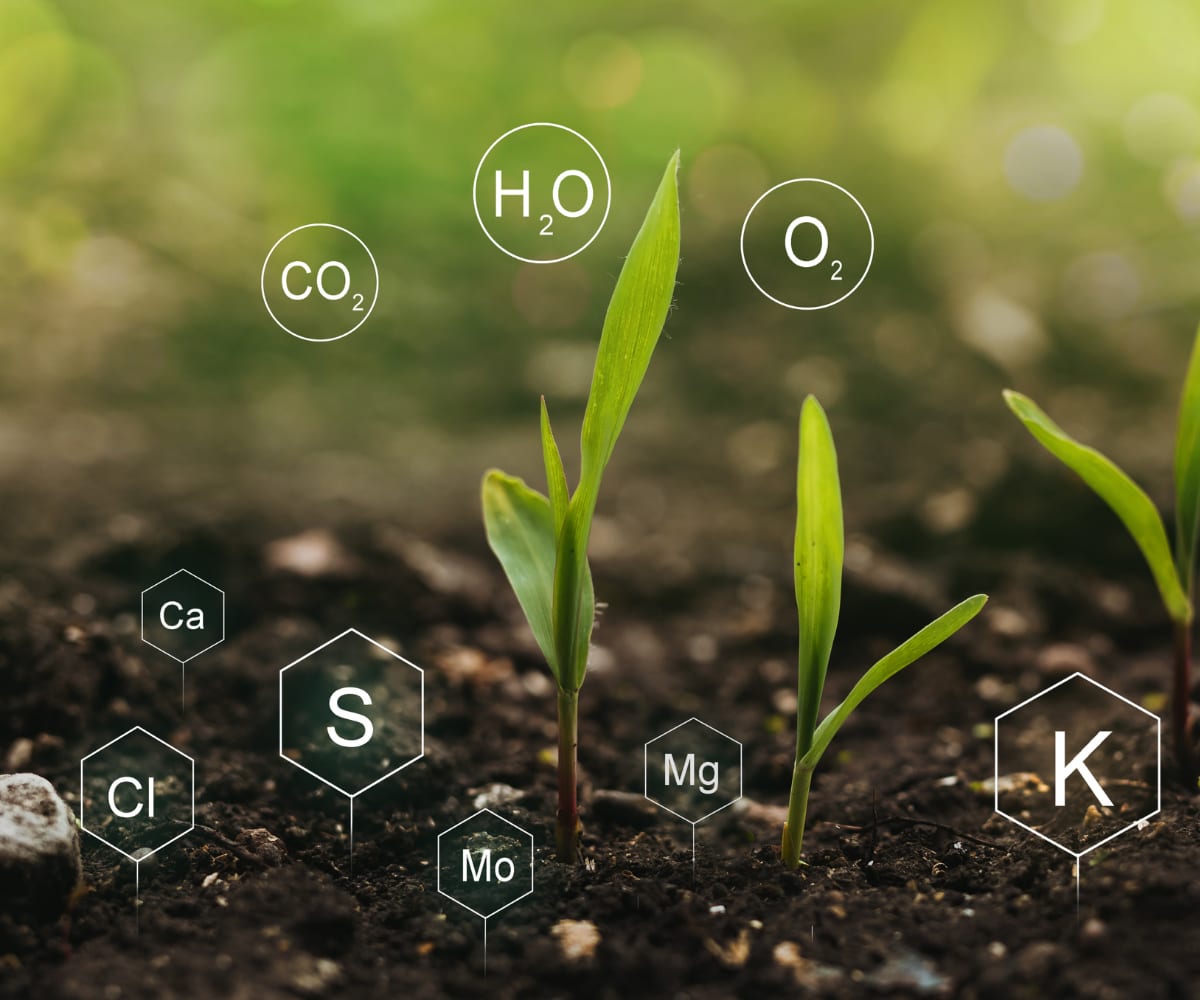
Cation exchange capacity (CEC) is how you measure the ability of soil to hold and release the elements needed for plant nutrition. To better understand CEC, let’s start with some basic chemistry.
Everything is made of atoms. In a perfect world, atoms are made of positively charged protons in their nucleus and an equal number of negatively charged electrons. The world is not perfect, however, and atoms can lose electrons or even gain extra ones. If an element loses electrons, it becomes positively charged. In this state, it is known as a cation (pronounced cat-eye-on). Conversely, if it gains extra electrons, it becomes negatively charged. In this state, it is known as an anion (pronounced ann-eye-on). The important thing to remember here is what you once learned about basic electricity or magnetism: opposite charges attract.
Acidity and Alkalinity
The acidity or alkalinity of soil (pH) is also a major parameter involving cation exchange. In fact, CEC and pH are two halves of the same story — the balance of cations on your soil’s exchange sites is what determines its pH in the first place. (For the pH side of that relationship, see the effect of soil pH on plants.) Cations (positively charged particles) can be divided into two categories: acidic, or acid-forming cations, and basic, or alkaline-forming cations.
Hydrogen and aluminum cations, for instance, are acid-forming cations, and neither of them are plant nutrients. A soil with high levels of hydrogen and aluminum is acidic, meaning it has a low pH. The cations that we are mainly concerned with in soil are calcium, magnesium, potassium and sodium. They are all basic cations and soil nutrients plants need. For example, potassium encourages root growth.
Cations in the Soil
So, how do cations work in the soil? Both acidic and basic cations can be adsorbed into the soil. You read that right: adsorbed with a “d,” not absorbed with a “b.” What’s the difference?
When you absorb something, you take it in or assimilate it. A sponge can absorb water, and a cast iron skillet can absorb heat.
Adsorb, on the other hand, means to gather on a surface in a condensed layer. All of the nutrients in the soil need to be held there somehow, or they will just wash away when you water the garden or get a good rainstorm. Cations allow the nutrients to be adsorbed and available for plants to use them.
Clay particles almost always have a negative charge, so they attract and hold (adsorb) positively charged elements. Organic matter found in soil has both positive and negative charges, so it can adsorb both cations and anions.
Soil CEC
Now that we know what a cation is, what about cation exchange capacity? Soil particles have negatively charged sites that attract and hold positively charged cations. The measurement of this is known as the cation exchange capacity (CEC). It is the measure of how many negatively charged sites are available in your soil, as determined through a soil test.
The “exchange” basically works like this: plant roots and soil microorganisms release positively charged hydrogen ions into the soil solution. Those hydrogen ions compete for the same negatively charged exchange sites that nutrient cations are holding. When a hydrogen ion takes over a site, the nutrient cation it displaced is released into the soil solution, where the root can absorb it. The site itself stays negatively charged and stays occupied — it has simply swapped one cation for another. That swap is the whole mechanism.
The CEC values of soils can vary widely and be an indicator of soil fertility. Sandy soils that are low in organic matter have a low CEC, while clay soils containing a lot of organic matter have a high CEC. One important regional caveat: not all clay is high-CEC clay. The heavily weathered red clays of the Southeast Piedmont are dominated by kaolinite, a low-activity clay mineral, and they have lost much of the exchange capacity that younger clays elsewhere still carry. If you garden in Georgia red clay, expect a CEC well below what a general soil textbook would predict from texture alone — which is exactly why organic matter matters so much here. Typically, the more organic matter soil has, the higher its CEC. And a higher CEC means more nutrients get to your plants, which leads to lush, green lawns and thriving, productive gardens!
CEC, Humus and Our Products
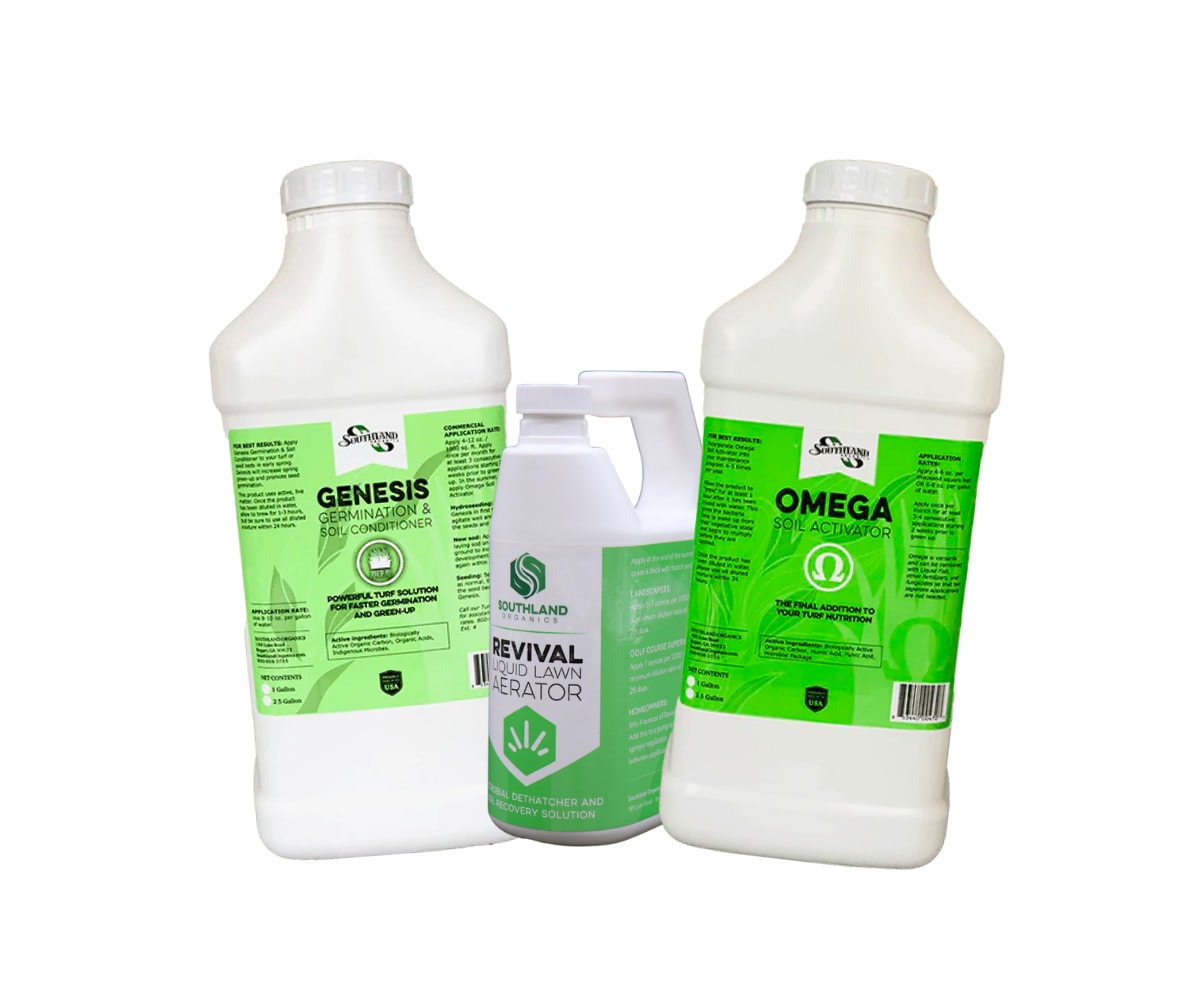
Having a high CEC in your lawn or garden sounds pretty good. But how can you increase CEC to help improve your soil? One easy way is by adding humus. Humus is rich organic matter, and beneficial microbes love it. It’s naturally found in most soils, but not all soil has enough of it to keep most plants happy. You can put humus in your soil by adding organic matter and having healthy soil microbes to break it down, or add another soil that contains large amounts of humus and humic acids.
Our solution to adding humus and increasing CEC in your soil is applying naturally derived, liquid microbial products. These products, like Genesis Soil Conditioner, Omega Soil Activator, Revival Liquid Lawn Aerator and more, can be sprayed on your lawn and garden to feed the biology that builds humus over time, and to improve the availability and chelation of the nutrients your plants can already reach. Be realistic about the timeline: as explained below, meaningfully raising a soil’s CEC means raising its humus content, and that is a multi-season project of adding organic matter and supporting the soil life that breaks it down. A liquid application supports that process — it does not substitute for it.
Learn more about our natural lawn and garden treatments.
CEC and the Elements
In the early 20th century, Dr. William Albrecht and his associates performed studies at the University of Missouri regarding different ratios of nutrient cations, specifically calcium, magnesium, potassium and sodium. They concluded that the strongest, healthiest crops grew where the soil’s CEC was saturated to about 65% calcium, 15% magnesium, 4% potassium and 1-5% sodium. The percentage of the CEC that a particular cation occupies is called the base saturation percentage.
A necessary caveat before you go chasing those numbers. This framework — the Base Cation Saturation Ratio, or BCSR — was never adopted by mainstream soil science. The most thorough review of the evidence (Kopittke and Menzies, Soil Science Society of America Journal, 2007) examined decades of trials and found no consistent yield or quality advantage to hitting these ratios versus simply making sure each nutrient is present in sufficient quantity. That second approach, the sufficiency level model, is what virtually every land-grant extension service recommends today. We include Albrecht’s work because it shaped a generation of biological agriculture and because the underlying observation about calcium, magnesium and soil structure holds up well in the field. Treat the specific percentages as one lens, not a target to fertilize toward.
The calcium to magnesium ratio is a major factor in determining the level of soil compaction. Looser soils tend to have more calcium, and tighter soils tend to have more magnesium. Soil high in calcium tends to have more oxygen, allows water to drain more freely and better supports aerobic breakdown of organic matter. High magnesium soil, on the other hand, tends to have less oxygen, drains water more slowly and decomposes organic matter poorly, if at all.
Slow residue breakdown is a useful field observation on its own. If you till up cornstalks from last year’s harvest and they are still largely intact, your soil biology is not processing organic matter well. Poor drainage, low microbial activity, a high carbon-to-nitrogen ratio, or a tight magnesium-heavy soil can all contribute. It is a signal worth investigating, not a diagnosis by itself.
There are also serious consequences if the balance goes too far the other way. If the calcium level gets too high, the soil will lose its necessary granulation and structure, and the high levels of calcium will interfere with the availability of other nutrients. If you get the ratio just right for your particular soil, you can drive over the garden and not have a problem with soil compaction. It’s also important to consider nitrogen—Plants use nitrogen to build amino acids, which then build plant proteins.
The desired ratio depends on your type of soil. For instance, in a heavy clay soil, you may want 70% calcium and 10% magnesium. The ratio is tilted toward calcium to loosen up the soil. If your soil is loose and sandy, 60% calcium and 20% magnesium will help tighten up the soil and improve its ability to hold water. Notice that the total of these ratios adds up to 80%. This leaves about 20% of the CEC open for other elements. Typically about 4% would be used for potassium and 1% to 3% for sodium, leaving 4% or 5% to be filled with other bases, such as copper and zinc or iron and manganese. The remainder will be occupied by exchangeable hydrogen. Soils managed toward high base saturation do tend to sit in a moderately acidic to near-neutral range, which is where most nutrients are plant-available — but the relationship between base saturation and pH varies with soil texture, mineralogy, and buffering capacity. There is no single pH that a given base saturation produces automatically. Test your soil rather than assuming a number.
What are colloids?
Clay is made up of such small particles that they are actually difficult to see with most microscopes. When mixed in water, they may never settle out and just remain suspended in the water. They do not get dissolved in water, but suspended. A particle that remains suspended in water but not dissolved is known as a colloid. When organic matter breaks down, it forms smaller and smaller particles until it can be broken down no further and still be considered organic matter. At that point, it is called humus. Humus is a colloid; when it is mixed into water, it will not readily settle out or float to the top.
Since colloids are so small, billions of colloidal particles can fit into a very small space. Since each of these particles has its own exterior surface, they have a very large surface area per unit volume or by weight. Some clays, such as vermiculite, have a surface area of around 800 square meters per gram, or over 200,000 square feet per ounce. The surface area of fully developed humus is about the same or even higher. Other clays have a much lower surface area, and some clays actually have a very low CEC, while humus always has a high exchange capacity.
Mineral Soils and Clay
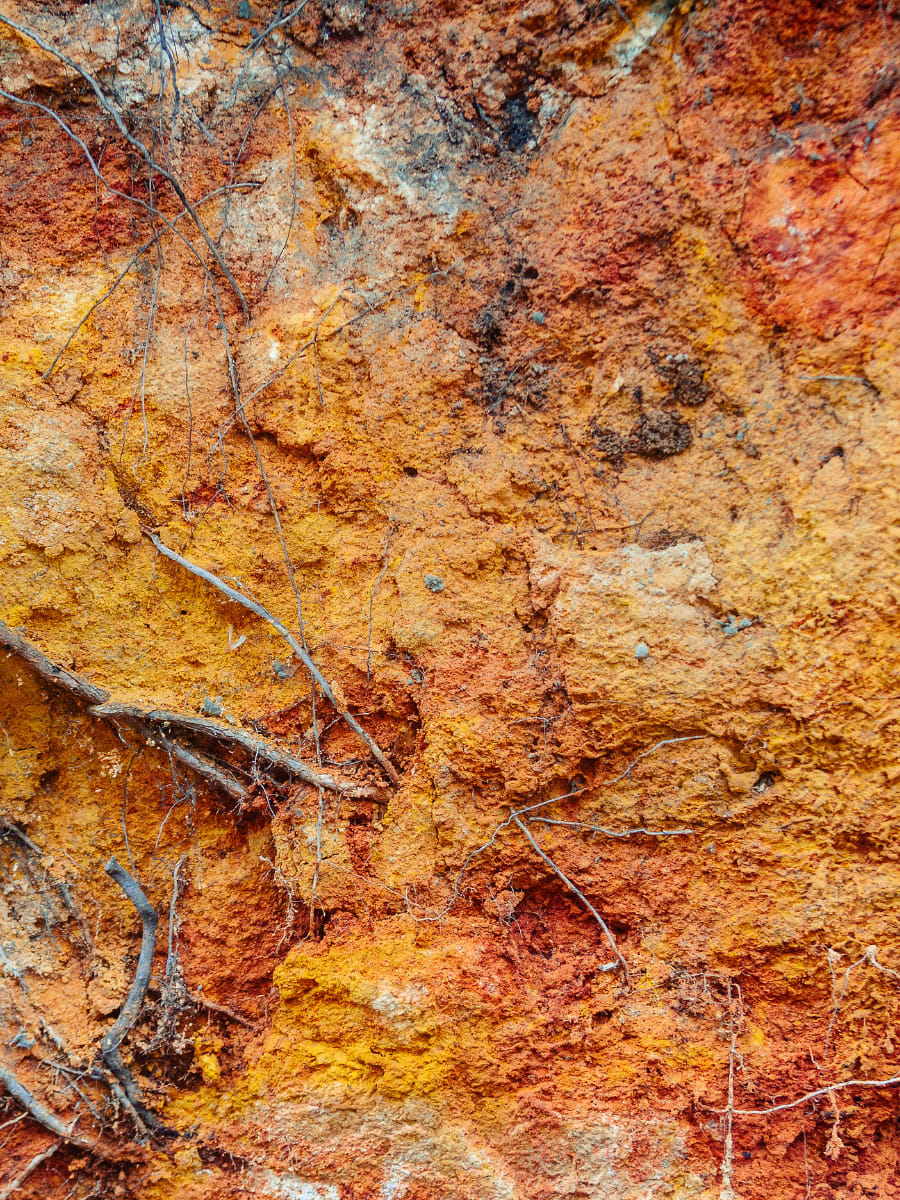
The breakdown of rock over time is what makes up mineral soils. Years of heating and cooling, freezing and thawing, erosion caused by wind and water, acid rain and biological activity break down rock into finer and finer particles. Eventually, the particles get so small that some of them re-crystallize into tiny flat platelets. They become colloidal clay, made up mostly of silica and alumina.
The age of a soil usually determines how much clay it contains. The more rainfall a soil gets, the faster it breaks down into clay. Arid regions are mostly sandy and rocky soil, unless they have areas of ancient or “fossil” clay. The bottoms of rivers in arid regions often have more clay because small clay particles easily wash into rivers and streams from areas without vegetation cover. Clays tend to stick together in microscopic layers. Newly formed clays are often made up of layers of silica and alumina sandwiched between potassium or iron.
On young clays, the only available cation exchange sites are on the edges. As the clays age, the filling between each layer is worn away by acid rain, microbes or plant roots, opening up more and more negatively charged exchange sites and increasing CEC. Eventually, these clays consist of tiny layers of silica and alumina, each separated by a thin film of water. These are the expanding clays. When they get wet, they swell, and when they dry out, they shrink and crack. Because these older expanding clays have exchange sites available deep between their layers and not just on the edges, they have a much greater CEC than freshly formed clays. The space between the layers of these expanding clays gets filled back in over millions of years with hydrated aluminum oxide. As this happens, they lose their exchange capacity again—this time forever.
In the southern half of the United States, the age of the clay fraction of the soil is younger in the west than the east. The arid Southwest, from California to western Texas, has largely young soils. They contain a lot of sand and gravel and some young clays without a lot of exchange capacity, making them low CEC soils. The mid-south, from West Central Texas and above into Oklahoma, Kansas and Nebraska, contains well-developed clays and high CEC soils. Continuing into the Southeast, there is heavier rainfall, older soils and generally aged clays that have lost much of their ability to exchange cations. Across Louisiana, Mississippi, Alabama and Georgia, the clays have been rained on and leached with no remaining reserves of calcium and magnesium. The northern states, from Washington in the west to Pennsylvania and New York in the east, were largely covered with glaciers as recently as 10,000 years ago. This brought them a fresh supply of minerals, and clays with a high exchange capacity are common.
More on Humus
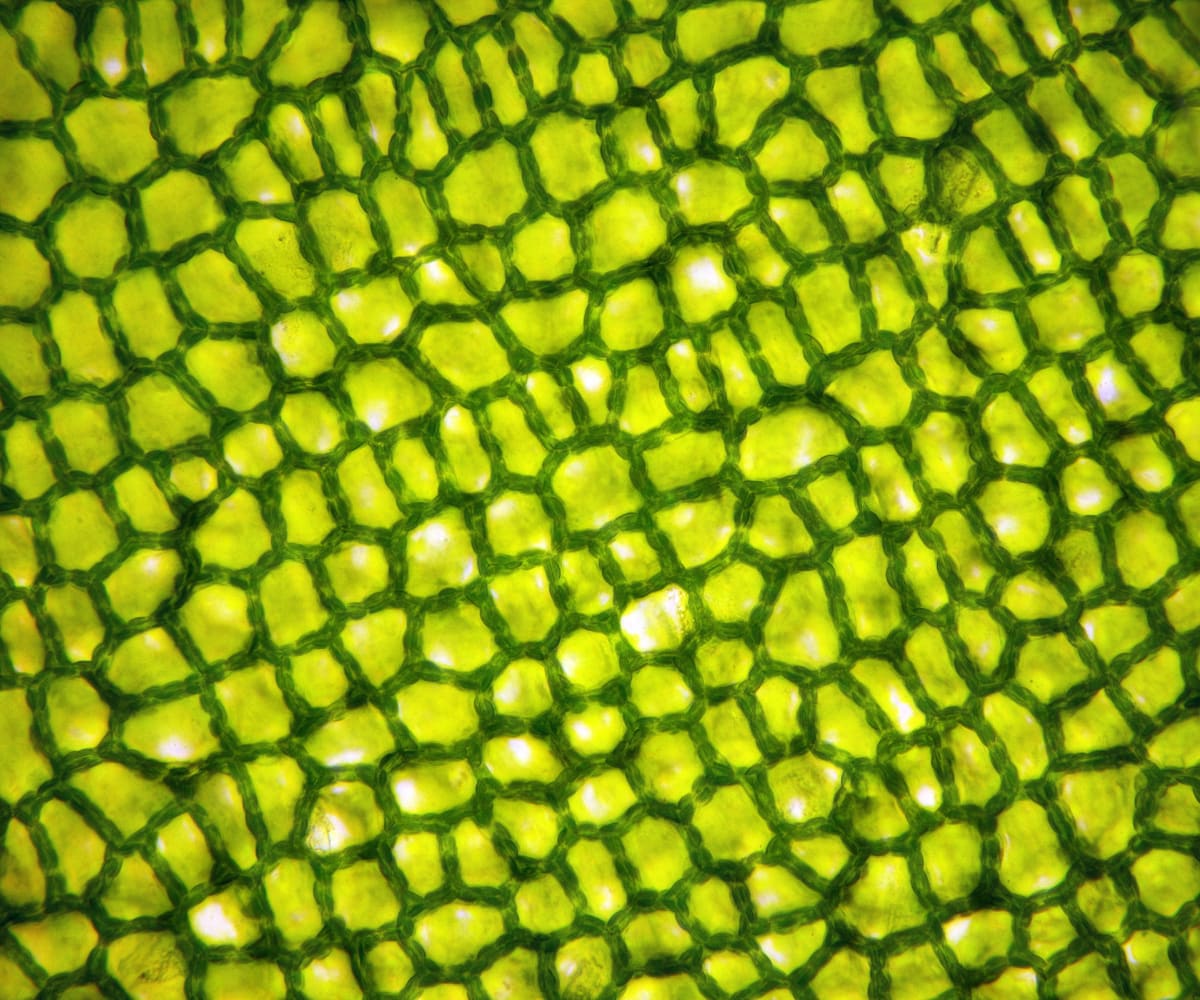
Any area that gets more rainfall tends to grow more vegetation. The portion of the soil that is made up of decaying organic matter usually increases in such areas. The breakdown of organic matter into humus is dependent on moisture, temperature and availability of oxygen. As these parameters increase, so does the rate at which organic matter breaks down. Moisture and oxygen being equal, colder upper latitudes tend to build up more organic matter in the soil than hotter southern climates.
One extreme, for instance, is the tropics where organic matter breaks down and disappears very quickly. The opposite extreme would be the peat beds and deep muck soils found in some northern states. There are always exceptions, such as the Everglades of Florida. The lack of oxygen combined with stagnant swamp water has formed the largest peat beds in the world. Another example is the area around Sacramento, California. When European settlers first farmed the delta there, they found muck soils 100 feet deep.
Organic matter straight from the compost, manure pile or the remains of last year’s crops won’t have much exchange capacity until it breaks down into humus. The formation of humus requires the action of soil microorganisms, earthworms, fungi and insects. When none of these organisms can use the organic material as food anymore, it has become a very small but very complex carbon structure. In this form, it can hold and release many times its weight in water and plant nutrients. The more humus found in a soil, the greater the CEC. The only way to increase humus in your soil is by adding organic matter and having healthy soil life to break it down, or to add a soil that contains large amounts of humus and humic acids. Humus and humic acids have an exchange capacity greater than even the highest CEC clays.
Understanding Cation Exchange
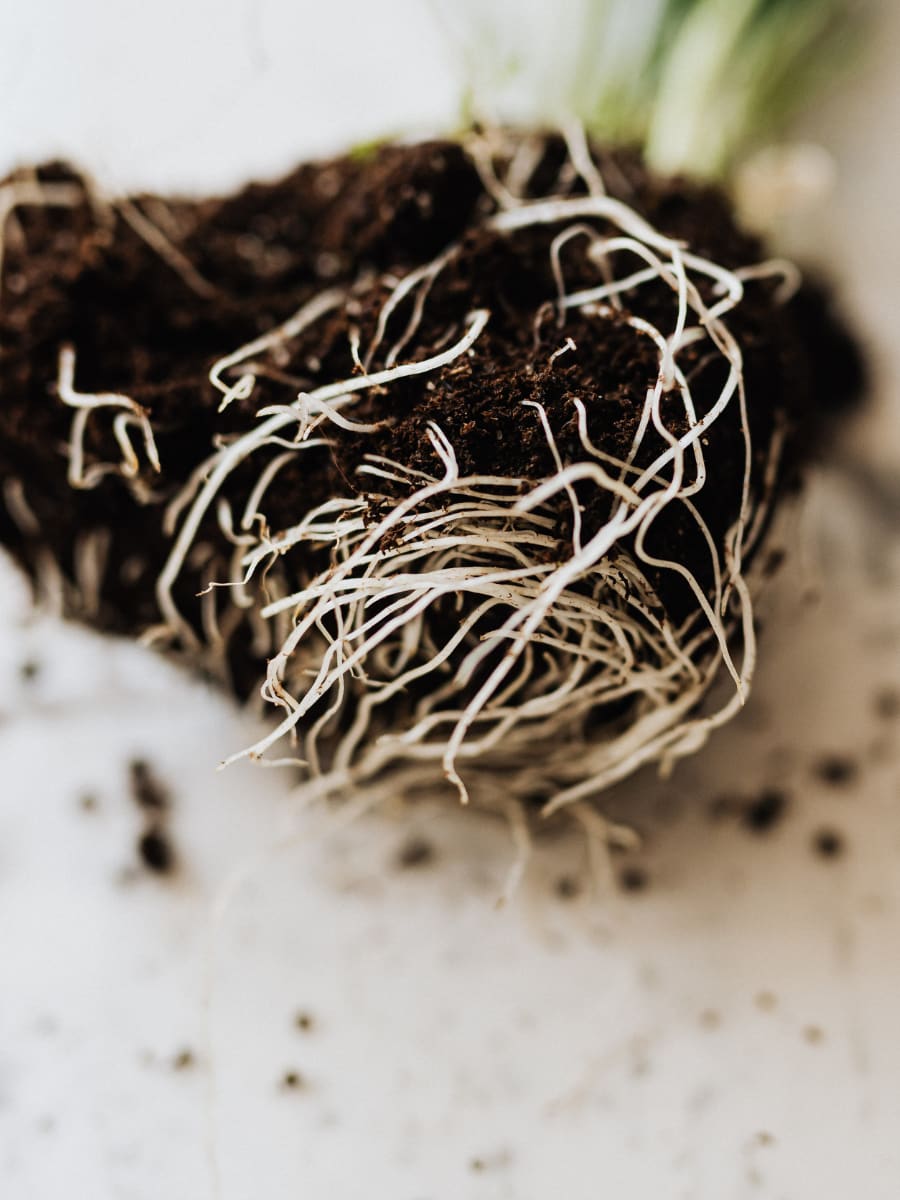
Alkaline nutrients are only held on the surface (adsorbed) by a weak, static electrical charge. They are actually being moved around constantly, pulled and pushed by other charged particles (ions) in the soil solution around them.
As described earlier, this exchange runs on hydrogen ions displacing nutrient cations from the exchange sites and putting them into soil solution where roots can take them up.
The way this works specifically with plant roots is that the plant roots expire or breathe out carbon dioxide (CO2) into the soil. CO2 combines with water in the soil and forms carbonic acid. The hydrogen ions from the carbonic acid replace the cation nutrient on the exchange site. A calcium ion held to an exchange site has a double-positive charge, which is written Ca++.
When enough H+ ions surround the calcium ion to the point that some of them get closer to the exchange site than the Ca++ ion, then two H+ ions will replace the Ca++ ion, and the plant is free to take the Ca++ up as a nutrient.
Measuring CEC
CEC is measured in milliequivalents per 100 grams of soil, written meq/100g. (Modern soil reports increasingly use cmol(+)/kg, which is the same number — 10 meq/100g equals 10 cmol(+)/kg.) The “per 100 grams” half matters: CEC is a ratio of charge to soil mass, never a bare number, so a soil test will always report it against that reference weight.
The idea is to compare 1 milligram of H+ hydrogen to 100 grams of soil. If every exchange site on that 100 grams of soil could be filled by that 1 milligram of H+, then the soil has a CEC of 1 meq/100g. If it had a CEC of 2, it would require 2 milligrams of hydrogen. Most mineral soils fall between 2 and 40 meq/100g — sandy soils at the low end, heavy clays and high-organic-matter soils at the top. Peat and muck soils can exceed 100.
The “equivalent” part means other positively charged ions can substitute for the hydrogen, and different elements fill the sites at different rates. If all sites were empty in that 100 grams of soil with a CEC of 1 meq/100g, it would take 20 milligrams of calcium (Ca++), 12 milligrams of magnesium (Mg++) or 39 milligrams of potassium (K+) to fill the same sites as 1 milligram of H+.
Calcium is the one worth walking through, because the arithmetic has two steps. Calcium’s atomic weight is 40 against hydrogen’s 1 — so by weight alone you would expect 40. But calcium carries a double positive charge (Ca++), so a single calcium ion satisfies two exchange sites at once. Divide that 40 by the charge of 2 and you get 20. That is why it takes 20 times as much calcium as hydrogen by weight, not 40. The same math explains magnesium: atomic weight 24, divided by its charge of 2, gives 12. Potassium carries a single charge (K+), so its atomic weight of 39 passes straight through undivided.
Keep Learning
This article is part of our Humate Hub. To see how humate raises CEC in practice, read why humate soil conditioner and understanding humate: a beginner’s guide.
We would love to help you improve your lawn and garden naturally by adding humate and increasing CEC. If you have any questions, reach out to us at success@southlandorganics.com or 800-608-3755. Don’t forget to subscribe to our YouTube channel for more helpful lawn and garden information.
Written by

Marketing
Marketing, Southland Organics • Agricultural marketing & content
Erin handles marketing at Southland Organics, crafting the campaigns and content that connect growers with the organic solutions they've been looking for.
View full profileReviewed by

Founder & CEO
20+ years in organic agriculture • Humate & soil biology specialist
Mike founded Southland Organics in 2009, the year before his daughter was born, after The Omnivore's Dilemma sent him into soil science. He will tell you he is not a microbiologist.
View full profile