

Septic systems are typically unable to degrade all of the biosolids that accumulate in the tank and leach fields. While indigenous microorganisms are present in most septic systems, they are not capable of degrading the waste at a sufficient rate to keep the system in proper operating order. The end result can be costly pump outs, or even worse: the system has to be removed and replaced at an extremely high cost.
The Problem: A Failing Septic System
A field evaluation was performed on a failing 900-gallon septic system with 429 square feet of leach field. The system had completely malfunctioned. There was no drain evacuation and water had penetrated through the soil above the drain field. The accumulation of biomass in the bottom of the leach field had created a shield (much like a layer of petroleum jelly over sand) that prevented the wastewater from leaching into the ground as designed.
The repair and replacement cost a company quoted the owner was $6,350.00. Along with the expense, there would also be a period of six days that the owner’s property would be in a state of total disruption. As you can imagine, this was not an appealing option to the property owner!
The Solution: Pump and add PORT
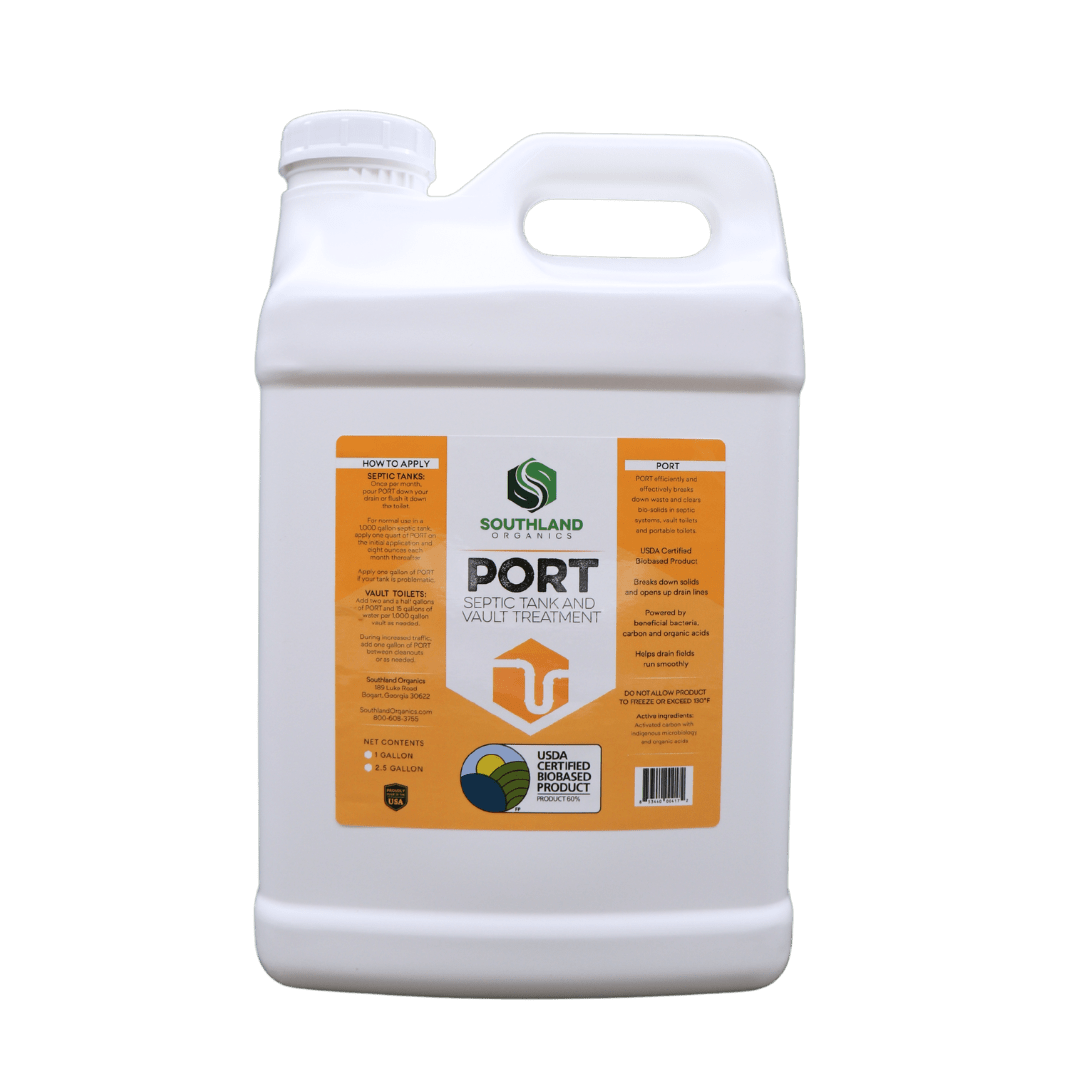
We at Southland Organics stepped in to help ameliorate the situation. First, the septic tank was pumped out. Water began to backflow into the tank from the leach field, giving another indication that the leach fields were definitely not working. The decision was made to pump the system because there was total blockage in all drains and lines, and there was no other method to get adequate flow throughout the system.
PORT, a biologically active and environmentally safe septic solution, was added at an application rate of one gallon per 100 gallons of tank capacity. In this case, nine gallons were added directly to the 900-gallon tank. At the junction box, one gallon of PORT was added for each 100 square feet of leach field in the system (4.3 gallons for the 429 square feet in the leach field). Note: If the leach system is a chamber type system, PORT must be added into each chamber based on the square footage of each line.
Within three days after treatment with PORT, the drains from the building began to flow more freely. Ten days after treatment, drain evacuation was performing as good as new. Sixty days later, the biomass accumulated in the bottom of the leach fields was cleared, and the wastewater began leaching as designed.
Conclusion: Owner Saved Septic System and Money
With slightly over 13 gallons of PORT, the malfunctioning system was restored to normal operation. The owner saved $6,350 in repair and replacement expenses and was not exposed to the unpleasant event of having his property in complete disruption for nearly a week. These savings of time, money and stress were accomplished without the use of harsh chemicals that can harm the environment.
Written by
Content Manager (Former)
Agricultural content specialist • Poultry industry researcher
Isabella served as Content Manager at Southland Organics, creating educational resources that help farmers understand and implement organic solutions for poultry, turf, and agriculture.
View full profileReviewed by

Founder & CEO
20+ years in organic agriculture • Humate & soil biology specialist
With years of experience in humate deposits and soil biology, Mike brings practical knowledge from the field to every conversation. He founded Southland Organics to create sustainable solutions that work with nature, not against it.
View full profile

